
Blog
Off-Track Doors in Shoreview: What's Really Going On
Shoreview's 1960s-70s tracks and severe cold both push garage doors out of alignment. See why doors go off track here and what a repair actually costs.
How Local Conditions Play In
Most of the garage doors we work on here went up between 1950 and 2003, with the bulk of that stock dating to the 1960s and 1970s. That matters because the steel track you've got is often the lighter-gauge roll-formed rail that era's builders used, bolted straight to the jamb framing rather than hung on an independent strut the way a lot of newer construction does it. Shoreview sits in a severe cold climate band, and repeated freeze-thaw cycles work the slab under that track until the anchor brackets shift a few degrees off plumb. You don't see it happen. You see the result: a door that used to glide now drags on one side, or a roller that pops the lip of the rail on the way down. None of this is a defect in your door. It's what happens when 1970s-grade hardware sits through forty-plus winters of slab movement. Houses built after the 1990s on this same block tend to show it less, simply because the track gauge and fastening changed. If your house is on the older end of that 1950-2003 range, the track is the first place I'd look before I'd blame the opener or the springs.
When to Call Someone
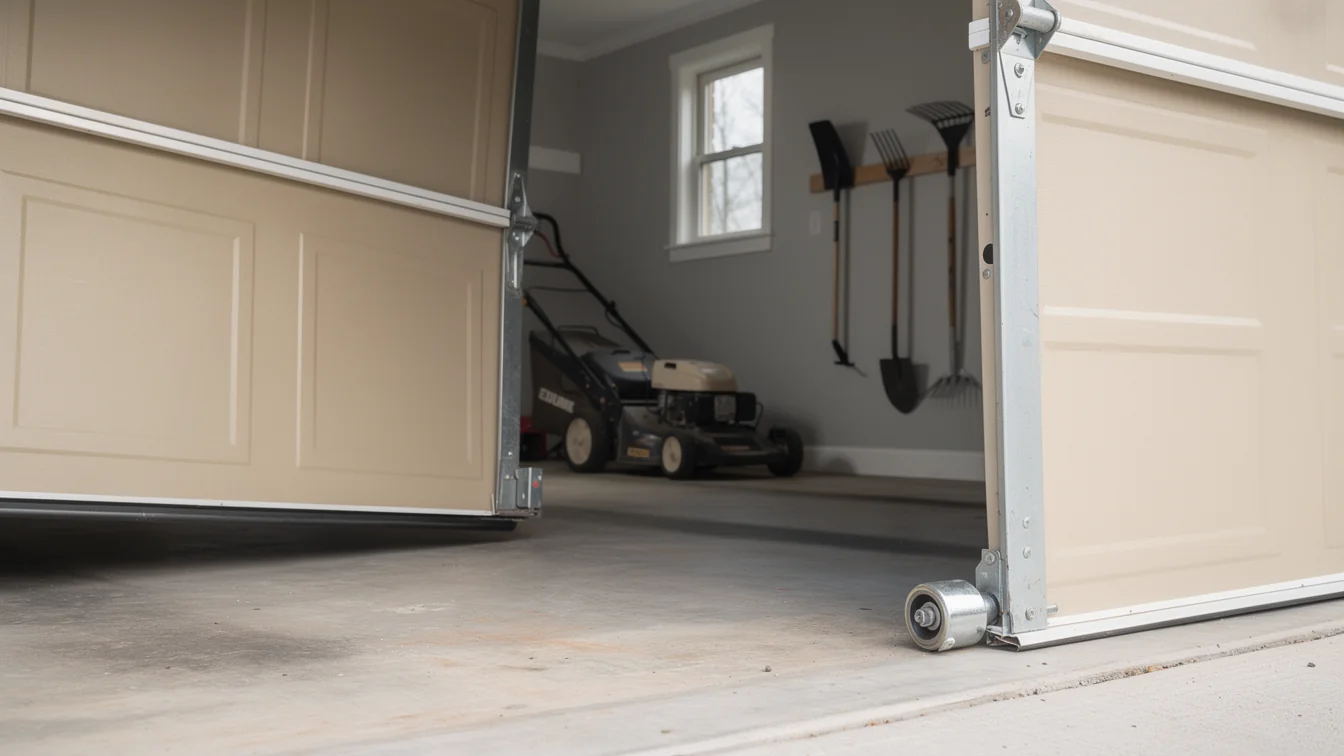
A door that's merely noisy can usually wait. A door that's visibly off track cannot - once a roller is out of the rail, the cables and the panel above it are carrying weight they weren't built to carry, and the next cycle can bend the track further or drop the section. Call right away if you see a gap between the roller and the track, if the door sits crooked in the opening when it's down, or if it stops partway and won't finish the cycle without you muscling it. Don't keep hitting the opener button hoping it'll seat itself back in - that's usually what bends the rail past the point of a simple adjustment. If the door came off the track because something hit it, or because a cable snapped, leave it where it is and call before anyone tries to force it closed by hand. A door under spring tension that's also off its track is heavy enough to hurt someone.
The Situation
On a house from the 1960s or 70s, the vertical track is usually bolted into the framing with a handful of lag screws and a couple of adjustable brackets, no more. When the slab shifts even a little - which it does every winter in this climate band - that framing moves, and the whole track racks with it a degree or two. A quarter inch of drift at the header can translate into an inch of lean down at the bottom roller by the time you notice it. Add in rollers that have been riding the same worn slots for decades, and you get a roller that walks sideways out of the rail under load instead of staying seated. Sometimes it's the track itself bent from a bump - a car mirror, a bike, a kid's basketball hoop stand - and sometimes it's just age and cold working on hardware that was never meant to last this long without a once-over. Either way, the fix starts with figuring out which it is, because a bent rail needs replacing and a shifted bracket just needs re-anchoring and squaring.
What You Pay
I can't give you a number here without seeing the door - a bracket that needs re-anchoring is a different job than a bent 16-foot track section, and I'm not going to quote one over the phone and pretend it covers both. What I can tell you is what drives the cost: whether the track itself is bent or just loose, whether the rollers need replacing along with it, and whether the opener's travel settings need to be reset once the door is running straight again. If your track is original to a house from the 1960s or 70s, there's a fair chance the whole section is due for replacement rather than a patch, since matching fifty-year-old rail gauge isn't something anyone stocks. That's the honest limit here - I'd rather tell you a repair isn't worth it on an old rail than sell you a quick fix that comes loose again in a year.
Questions
Common questions
Why does my garage door lean to one side when it closes?
Usually it means one side of the vertical track has shifted relative to the other, which is common in houses from the 1960s-70s era where the track is bolted straight to the framing. Slab movement through a severe winter nudges one bracket out of line while the other holds, and the door starts tracking crooked instead of straight down.
Can I push the roller back into the track myself?
No. If a roller is out of the rail, the door and cables are under spring tension they weren't designed to carry that way, and forcing it back in by hand risks the panel dropping or the cable snapping. Leave the door where it is and have someone look at it before running the opener again.
Is an off-track door always a track problem?
Not always - a worn roller or a bent bracket can cause the same symptom. But on older stock in this area, bent or shifted track from decades of freeze-thaw movement is the most common cause we find, more often than the springs or the opener getting blamed for it.
Recommendation
You Might Also Like
More garage door guides for Shoreview homeowners.
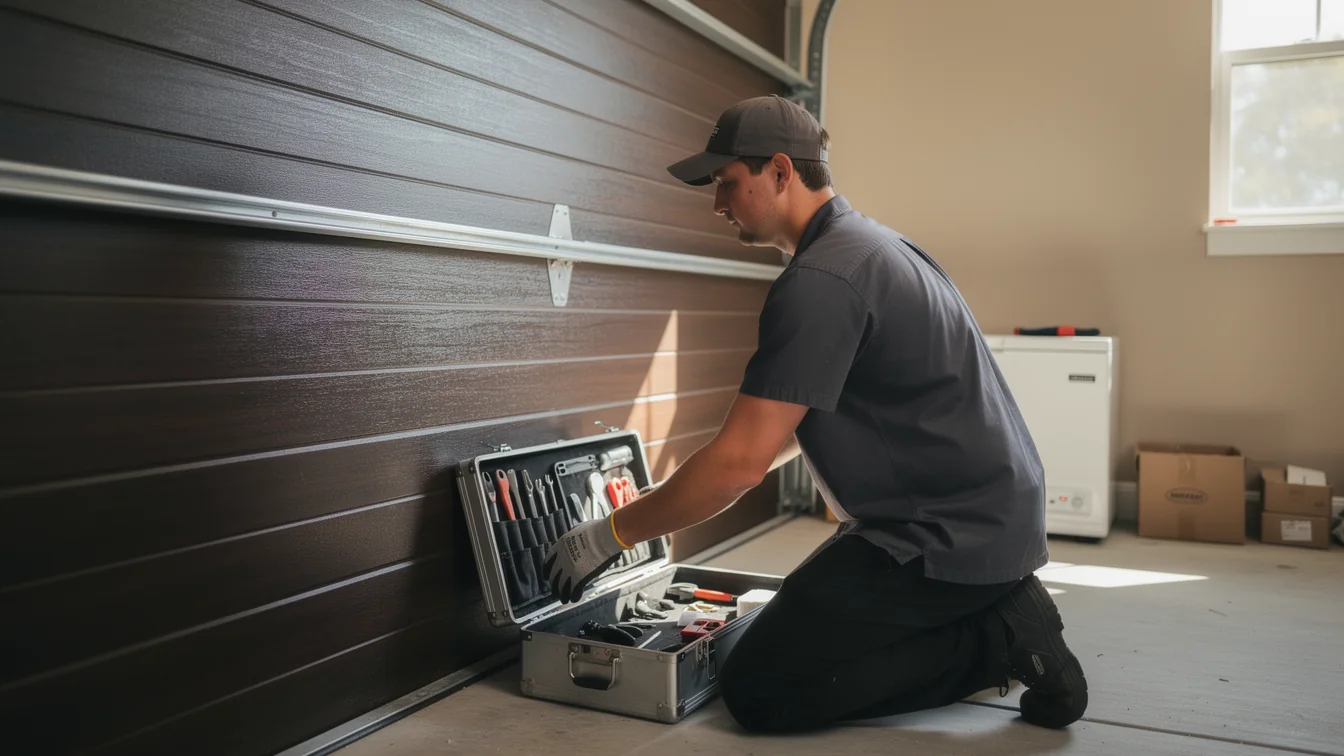 What Actually Happens When We Come Out to Your House
A plain look at what happens when Shoreview Garage Door Pros comes to your house, based on the age of this housing stock and the cold we actually get here.
 What a New Garage Door Costs and Means in Shoreview
Thinking about buying a replacement door here in Shoreview?
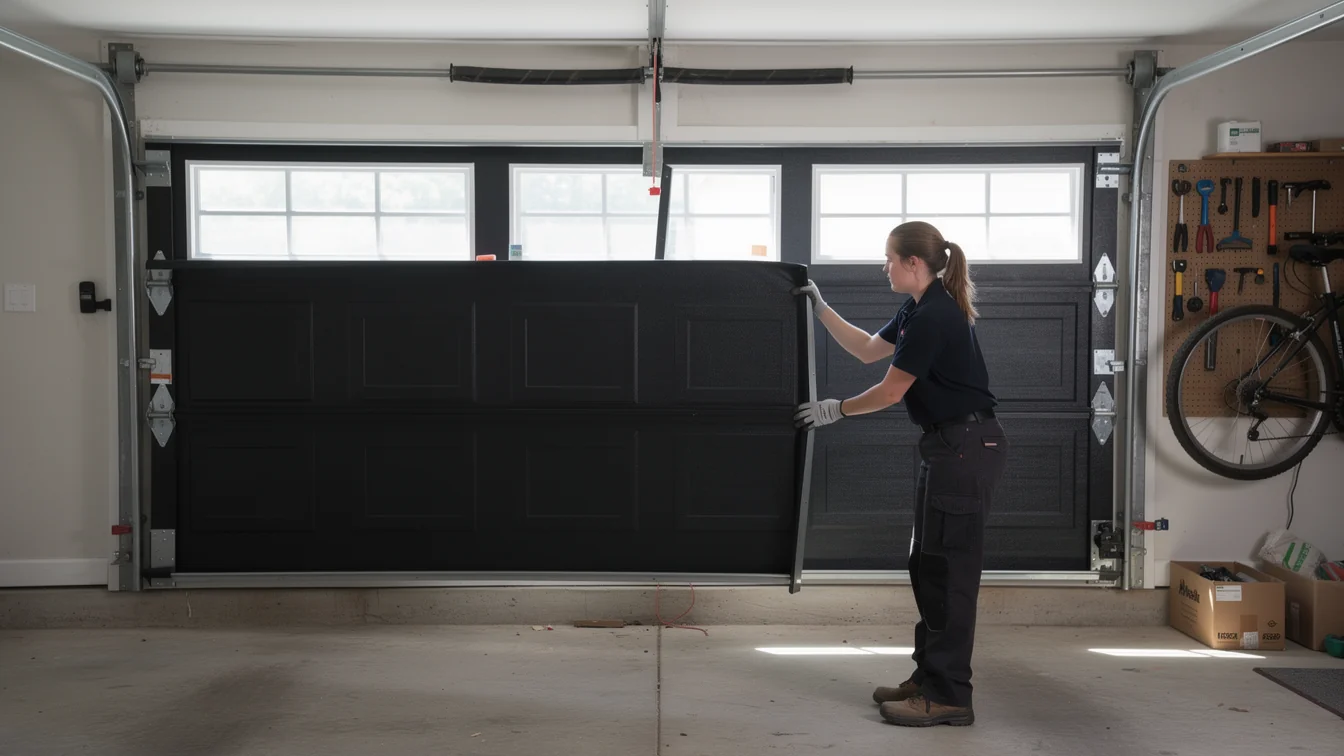 What Our Techs Check First on a Shoreview Garage Door
In Shoreview homes built between 1950 and 2003, a technician checks spring tension, track alignment, and weatherstripping first, especially in cold winters.
Ready when you are
Need a garage door sorted in Shoreview?
Shoreview Garage Door Pros repairs and installs garage doors, springs and openers in Shoreview, MN and the surrounding area.